Crossing the Red Dunes: Silent Night Navigation
Published by Editorial Staff on November 15, 2024 • 8 min read
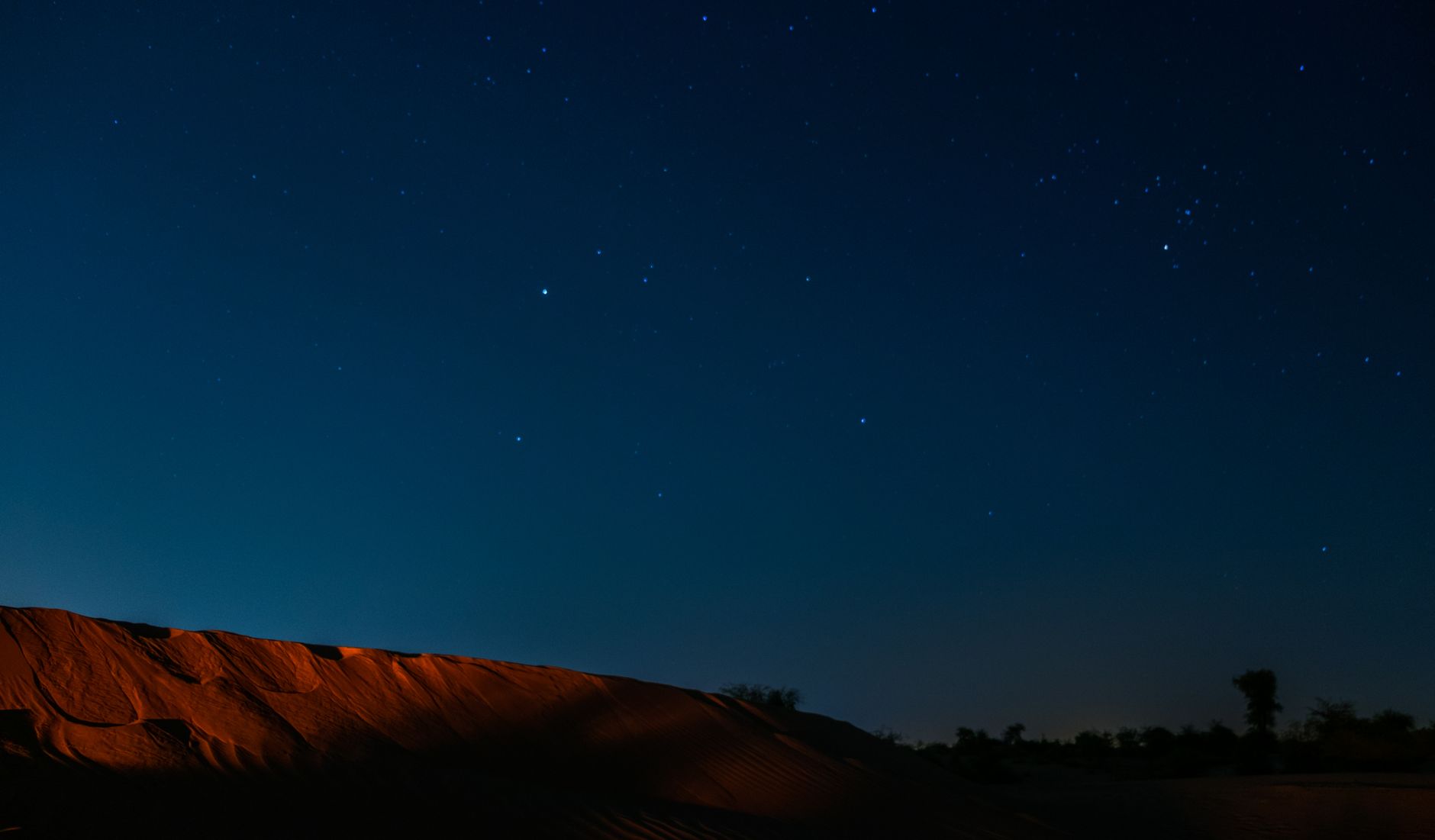
At four thousand meters above sea level in the Atacama Basin, humidity drops to negligible levels and the atmosphere thins to razor-sharp clarity. As twilight dissolves, the rust-colored landscape turns indigo, and the sky ignites with billions of celestial pinpricks unreachable in urban worlds.
Led by indigenous cartographer Mateo, our small convoy traversed the wind-sculpted ridges of the Valle de la Luna with extinguished headlamps, navigating purely by the luminous glow of the Milky Way arching across the zenith.
The Science of Silence
Here, there is no ambient humidity to scatter light. The cosmic dust lanes of the galactic center cast tangible shadows across the salt crust. For centuries, native travelers plotted caravan routes by reading the dark constellations—the silhouettes formed by interstellar dust clouds rather than the stars themselves.
"The desert does not demand words. It demands listening to the cold wind and letting your eyes expand to cosmic dimensions."
Field Discoveries
- Extreme Thermal Shifts: Temperatures dropping from 28°C under midday sun to -8°C at 3:00 AM.
- Mineral Geometries: Salt polygons that crack and expand with loud, crystalline echoes during nightly cooling.
- Optical Astronomy: Viewing the Magellanic Clouds with unmatched naked-eye fidelity.
Standing in the stillness of dawn as the desert sands shift from gunmetal gray to vibrant copper, the sense of geological humility is absolute. Such places serve as essential anchors, reminding humanity of its microscopic place in the great unfolding cosmos.